
Stainless Steel for Data Centre Cooling Systems
Data centre cooling systems run around the clock, and a leak or corrosion failure can put IT equipment at risk. Stainless steel is used in liquid cooling loops, coolant distribution units, chilled water and condenser water connections, and the structures that support them.
Kentzu Steel has supplied stainless steel pipes, fittings, flanges, sheets, plates and bars to industrial customers in Malaysia and across the ASEAN region since 1983.
How Heat Leaves a Data Centre
Heat travels from the chips to the outside air through a series of loops. Each loop carries different water, so each has different material requirements.
- 1IT equipmentCold plates on the processors, or rear-door heat exchangers on the racks, capture the heat.
- Closed loopTechnology cooling system (TCS)
Also called the secondary fluid network. Treated water or a propylene glycol mixture. Wetted materials are commonly limited to stainless steel and copper alloys.
- 2Coolant distribution unit (CDU)Transfers heat from the TCS to the facility water and keeps the two loops separate.
- Closed loopFacility and chilled water
Treated water. Stainless steel, carbon steel or plastic piping, depending on the specification.
- 3ChillerRemoves heat from the chilled water and passes it to the condenser water.
- Open loopCondenser water
Evaporation concentrates chlorides. Carbon steel headers are common, with stainless steel at tower and equipment connections.
- 4Cooling towerRejects the heat to the atmosphere through evaporation.
Designs vary. Air-cooled halls have no TCS loop, and chilled water goes directly to computer room air handlers. Some facilities use dry coolers instead of cooling towers, which keeps the heat rejection side closed. Some liquid-cooled designs supply the CDUs from a warm-water loop without a chiller.
Stainless Steel Along the Heat Path
Liquid Cooling Loop (TCS)
As AI and high-performance computing push rack power higher, more data centres use direct liquid cooling. The TCS, also called the secondary fluid network (SFN), carries coolant to the IT equipment. The coolant is typically treated water or a propylene glycol mixture, such as 25% propylene glycol (PG25).
The TCS needs a higher level of water quality than the facility water. For this reason, wetted materials in the loop are commonly limited to stainless steel and copper alloys, and plain carbon steel is avoided because rust can foul the loop. For welded stainless steel, low-carbon grades such as 304L and 316L are preferred.
Always check the wetted-materials list from the CDU and IT equipment manufacturers before selecting piping materials. Some projects also use polymer piping for parts of the loop.
Cleanliness during installation matters as much as the material. Keep pipe ends capped, keep stainless steel away from carbon steel tools and debris, and flush the loop before it is filled.
At the racks, connections are usually made with smaller tubing, hoses, manifolds and quick-disconnect couplings. Kentzu Steel's pipes, butt-weld fittings and flanges suit the larger distribution piping, such as TCS mains, CDU headers and chilled water lines.
Kentzu Steel supplies welded and seamless pipes, together with butt-weld fittings and flanges, for this distribution piping and other cooling water lines.
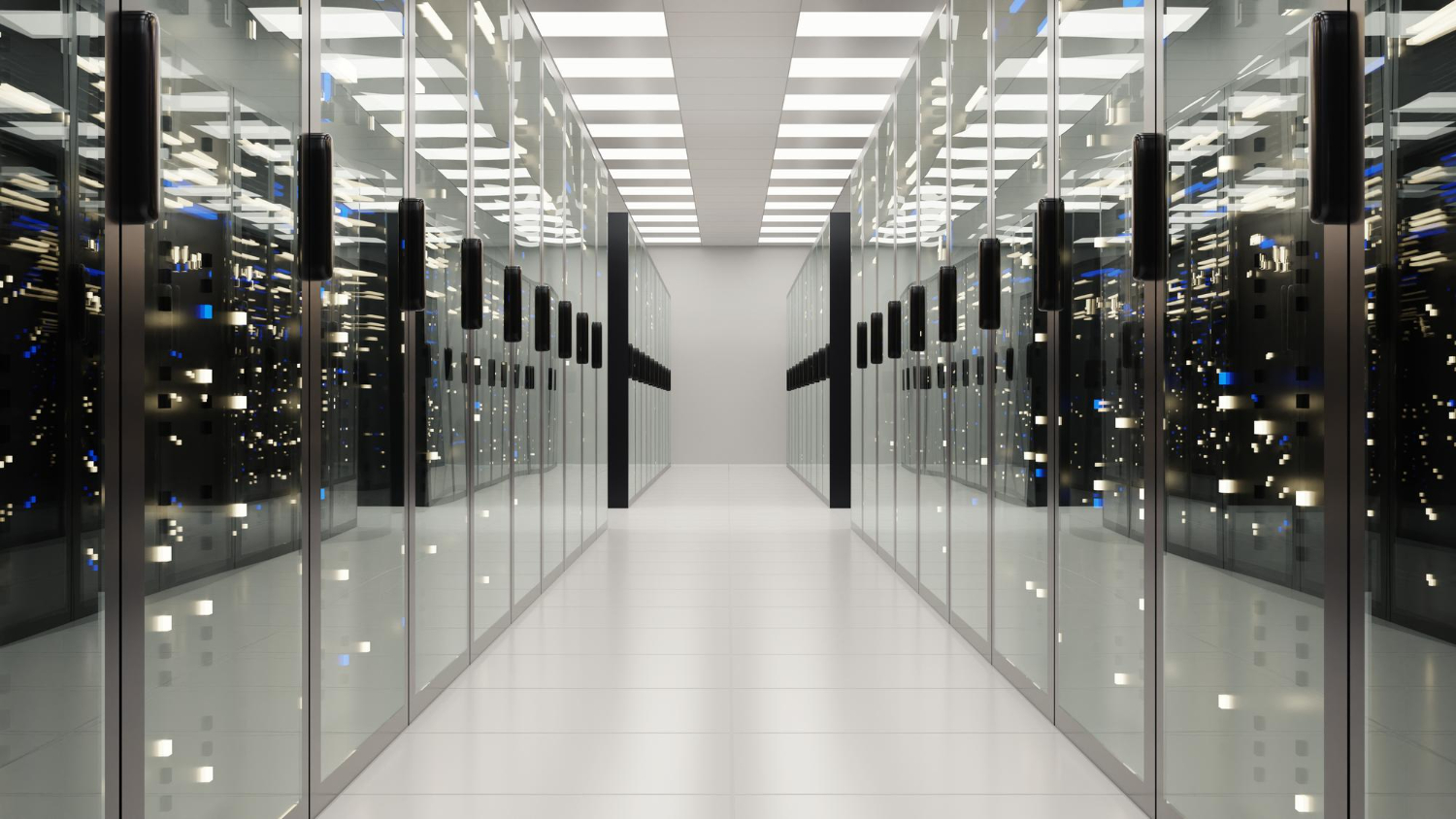
CDUs, Manifolds and Cooling Skids
CDU manufacturers commonly use 304 or 316 stainless steel for internal pipework. For example, Vertiv's CoolChip CDU specifications list S304/S316 stainless steel internal pipework.
Many projects prefabricate CDUs, manifolds and cooling skids off site to shorten installation time. Prefabrication also reduces the number of joints made on site, and every joint is a potential leak point. Fabricators use stainless steel pipe, fittings and flanges for the wetted parts, and sheet and hollow sections for frames and brackets.
Chilled Water Loop
Chilled water supplies the CDUs, air handling units and precision cooling units. The piping material depends on the project specification, and stainless steel, carbon steel and plastic piping are all used.
On many projects, large primary headers are carbon steel where cost drives the decision. Stainless steel is specified for secondary distribution, or wherever corrosion resistance and cleanliness justify the cost.
Condenser Water and Cooling Towers
In an open cooling tower, water evaporates and dissolved solids, including chlorides, become more concentrated. Condenser water is therefore usually more aggressive than the water in a closed loop.
Large condenser water headers are commonly carbon steel with a coating or galvanising. Stainless steel is used for cooling tower nozzles, connections to sensitive equipment, and wherever the specification requires it.
Beyond the Cooling Loops
Emergency Power Systems
Data centres keep standby generators to maintain power during outages, and their fuel, exhaust and cooling water systems also need durable piping. Carbon steel fuel piping can corrode because diesel fuel carries trace amounts of water, so some operators specify stainless steel for fuel lines and connections. Stainless steel is also used for generator exhaust pipes and cooling water pipes, depending on the design and the applicable fire and fuel codes.
Platforms, Walkways and Supports
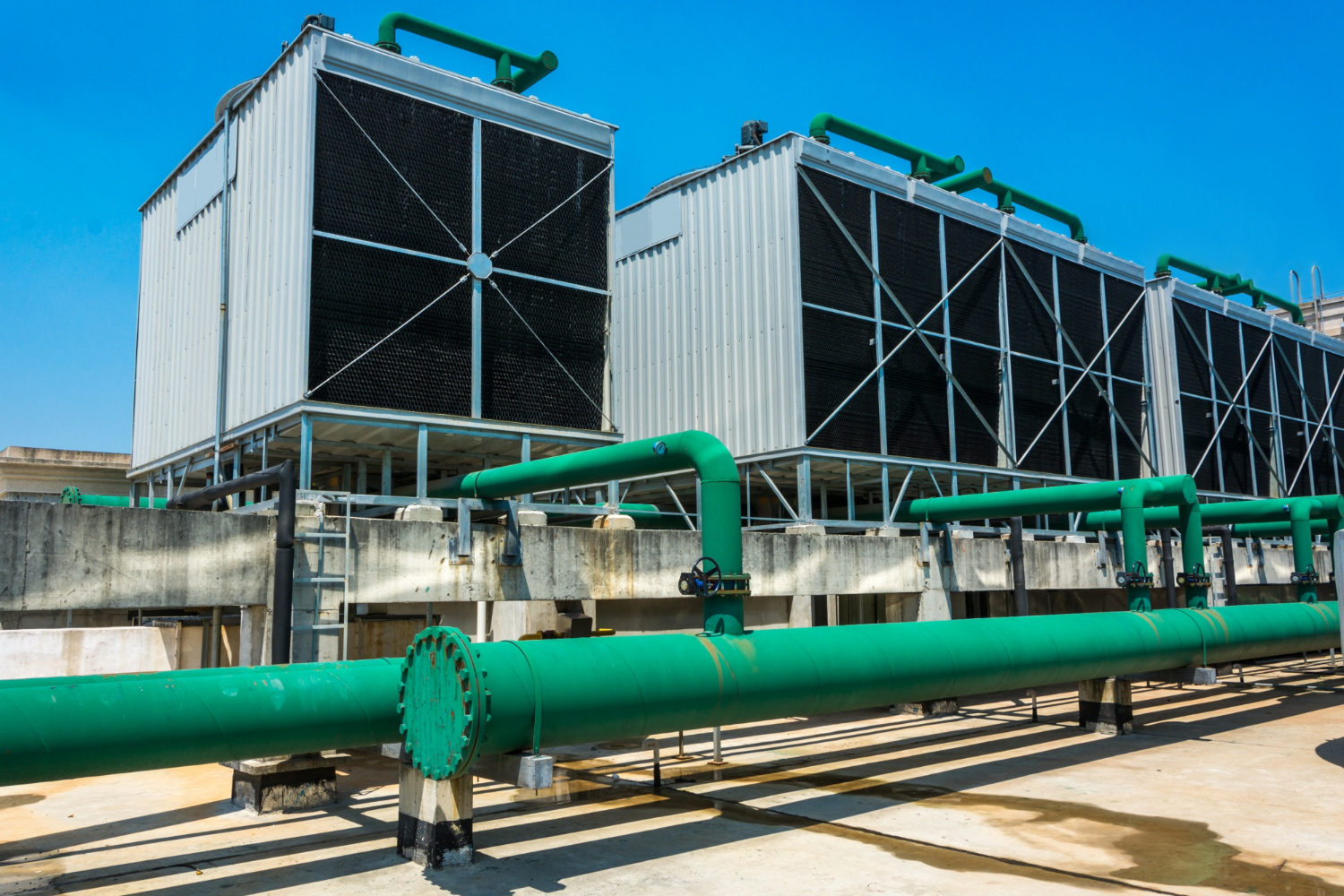
Rooftop and outdoor plant areas need platforms, walkways and pipe supports that withstand the weather. Stainless steel chequered plate, angle bars, U channels and hollow sections are used for these, particularly in exposed or coastal locations.
Closed Loops vs Open Loops: Choosing 304L or 316L
In a data centre, the most useful question for grade selection is whether the water is in a closed loop or an open one.
| Closed Loops (TCS, Chilled Water) | Open Loops (Condenser Water, Cooling Towers) | |
|---|---|---|
| Water condition | Treated water or glycol mixture with controlled chemistry | Evaporating water in which solids and chlorides concentrate |
| Corrosion risk | Lower when water treatment is maintained | Higher, especially at elevated chloride levels |
| Typical stainless grade | 304L is usually adequate | 316L is preferred |
| Other materials used | Copper alloys in the TCS; carbon steel or plastic in chilled water | Coated or galvanised carbon steel headers |
Both 304L and 316L are low-carbon grades, with carbon limited to 0.030% to 0.035% depending on the product standard, which suits them to welded piping. 316L adds 2% to 3% molybdenum for better resistance to chloride pitting and crevice corrosion, at a higher cost.
Specify 316L for outdoor pipework and supports near the coast, wherever the water analysis shows significant chloride content, and wherever the project specification requires it.
Grade alone does not keep a cooling loop clean. Fabrication quality, flushing and water treatment matter as much as the material.
For a wider comparison, read our guide: Stainless Steel 304 vs 316: Differences, Uses & Which One Should You Choose?
Considerations for Data Centres in Malaysia
Malaysia is one of the fastest-growing data centre markets in the region. According to JLL Malaysia's 2Q2026 report, as reported by New Straits Times, the country's operational data centre capacity is set to rise from about 900 MW at the end of 2025 to 2,055 MW by the end of 2026, with Johor accounting for most of that growth. Johor is the main hub, followed by the Klang Valley, including Cyberjaya and Kuala Lumpur.
Water and power are now part of the approval process. Johor has set up a Special Technical Committee that evaluates new data centre developments on water requirements, electricity demand, utility infrastructure and site suitability, according to The Edge Malaysia. This puts more focus on efficient cooling designs that perform reliably over the long term.
Location also affects grade selection. Some data centre sites, including parts of Johor, are close to the coast. For exposed outdoor pipework, platforms and supports in these locations, 316L is often the better choice.
Stainless Steel Products for Data Centre Cooling Projects
Kentzu Steel supplies the following stainless steel products for cooling systems, equipment fabrication and support structures.
| Product | Standard and Range | Typical Use in Data Centre Cooling |
|---|---|---|
| Welded & Seamless Pipes | ASTM A312 / ASME SA312 | Liquid cooling distribution piping, chilled water and condenser water connections |
| Butt Weld Fittings | ASTM A403, Sch 10S / 40S, elbows up to 12", tees up to 8" | Elbows, tees, reducers and stub ends for cooling water piping |
| Forging Flanges | ASTM A182, 1/2" to 12", Class 150 / 10K / PN16 | Connections at CDUs, pumps, chillers and valves |
| Sheets & Plates | ASTM A240 / ASME SA240 | CDU and skid fabrication, panels and brackets |
| Hollow Sections | ASTM A554 | Skid frames, pipe supports and equipment racks |
| Round Bars & Shafts | ASTM A276 / ASME SA479 | Machined parts, brackets and pipe support components |
For platforms, walkways and supports, we also supply stainless steel chequered plate, angle bars, U channels and H beams.
Stainless Steel Pipe Range
| Specification | Range |
|---|---|
| Grades | 304 / 304L / 316 / 316L |
| Types | Welded and seamless |
| Standard | ASTM A312 / ASME SA312 |
| Nominal pipe sizes | 1/2" to 16" |
| Schedules | Sch 10S / Sch 40S / Sch 80S |
| Standard length | 6 metres |
The correct schedule depends on the design pressure, temperature and applicable piping code. Fittings are listed up to 12" (tees up to 8") and flanges up to 12", so please confirm availability for larger lines.
Explore our stainless steel products
What to Include in Your Enquiry
A complete enquiry allows us to prepare an accurate quotation without repeated clarification. Please include:
For example, welded pipe to ASTM A312 or plate to ASTM A240.
State 304, 304L, 316 or 316L exactly as specified. If the specification calls for 304L and 304 is offered, ask whether the material is dual-certified 304/304L.
For pipe, give the NPS, schedule and length. For sheet and plate, give the thickness, width, length and finish.
State the fluid, such as treated water, PG25 or condenser water, and whether the material will be installed indoors or outdoors.
State whether your quality assurance requires mill test certificates, heat-number traceability or other inspection records.
For large projects, share the delivery schedule and site location so stock and delivery can be planned.
Why Choose Kentzu Steel for Data Centre Projects
Data centre cooling projects need the right material in the right specification, delivered to schedule. This is how Kentzu Steel supports mechanical contractors, equipment fabricators and procurement teams.
Over four decades of stainless steel experience
Established in 1983, Kentzu Steel has more than 40 years of experience in stainless steel trading, sourcing and industrial supply, across a wide range of product forms, grades and specifications.
One source for cooling and structural materials
A data centre cooling package often needs piping and structural materials at the same time. We supply pipes, fittings, flanges, sheets, plates, hollow sections, bars and structural sections, so contractors can coordinate them through one supplier.
Pipes and fittings made within our group
Our subsidiary Kanzen Tetsu Sdn Bhd manufactures stainless steel pipes, and S.P. United Industry Sdn Bhd manufactures stainless steel fittings. Both are ISO certified.
Support for customised requirements
Where standard products do not fully meet a project's needs, we support customised requirements based on the required sizes, specifications and intended application. Share your grade, dimensions, finish, standards and drawings for assessment.
Experience across traditional and technology industries
We supply industries including oil and gas, petrochemical processing, water treatment, semiconductor manufacturing and data centre cooling systems. See the industries we serve.
Supply across Malaysia and ASEAN
Our products support industries across the Klang Valley, Johor, Penang, East Malaysia and the wider ASEAN region. Kentzu Steel is also registered with the Ministry of Finance Malaysia for government-related projects.
Frequently Asked Questions
What stainless steel grades are used in data centre cooling systems?
304L and 316L are widely used. 304L suits treated closed loops and indoor applications. 316L is preferred for condenser water, cooling tower connections and outdoor or coastal exposure, where chlorides are a concern.
Can stainless steel be used in liquid cooling loops?
Yes. Stainless steel and copper alloys are common wetted materials in technology cooling system (TCS) loops, also called the secondary fluid network. Always check the wetted-materials list from the CDU and IT equipment manufacturers before selecting piping.
Is 316L required for data centre cooling?
Not always. It depends mainly on whether the water is in a closed or open loop. 304L is usually suitable for treated closed loops such as chilled water and TCS loops. 316L is the safer choice for open loops such as condenser water, where chlorides concentrate, and for pipework exposed to coastal air.
Is carbon steel suitable for data centre cooling water?
Carbon steel is common for large chilled water and condenser water headers, with water treatment and coatings. It is avoided in liquid cooling (TCS) loops, because rust can foul the loop and the equipment it serves.
Is stainless steel used in data centre generator systems?
Yes, depending on the design. Some operators specify stainless steel for diesel fuel lines, because carbon steel can corrode from trace water in the fuel. Stainless steel is also used for generator exhaust and cooling water pipes. The applicable fire and fuel codes should always be checked.
What information should I provide for a quotation?
Provide the product, standard, grade, dimensions, service conditions, quantity, documentation requirements and delivery location.
Request a Quotation
Sourcing stainless steel for a data centre cooling project? Send us your enquiry and our team will be glad to help. Even a rough list is a good place to start.