
Stainless Steel for Petrochemical & Chemical Processing
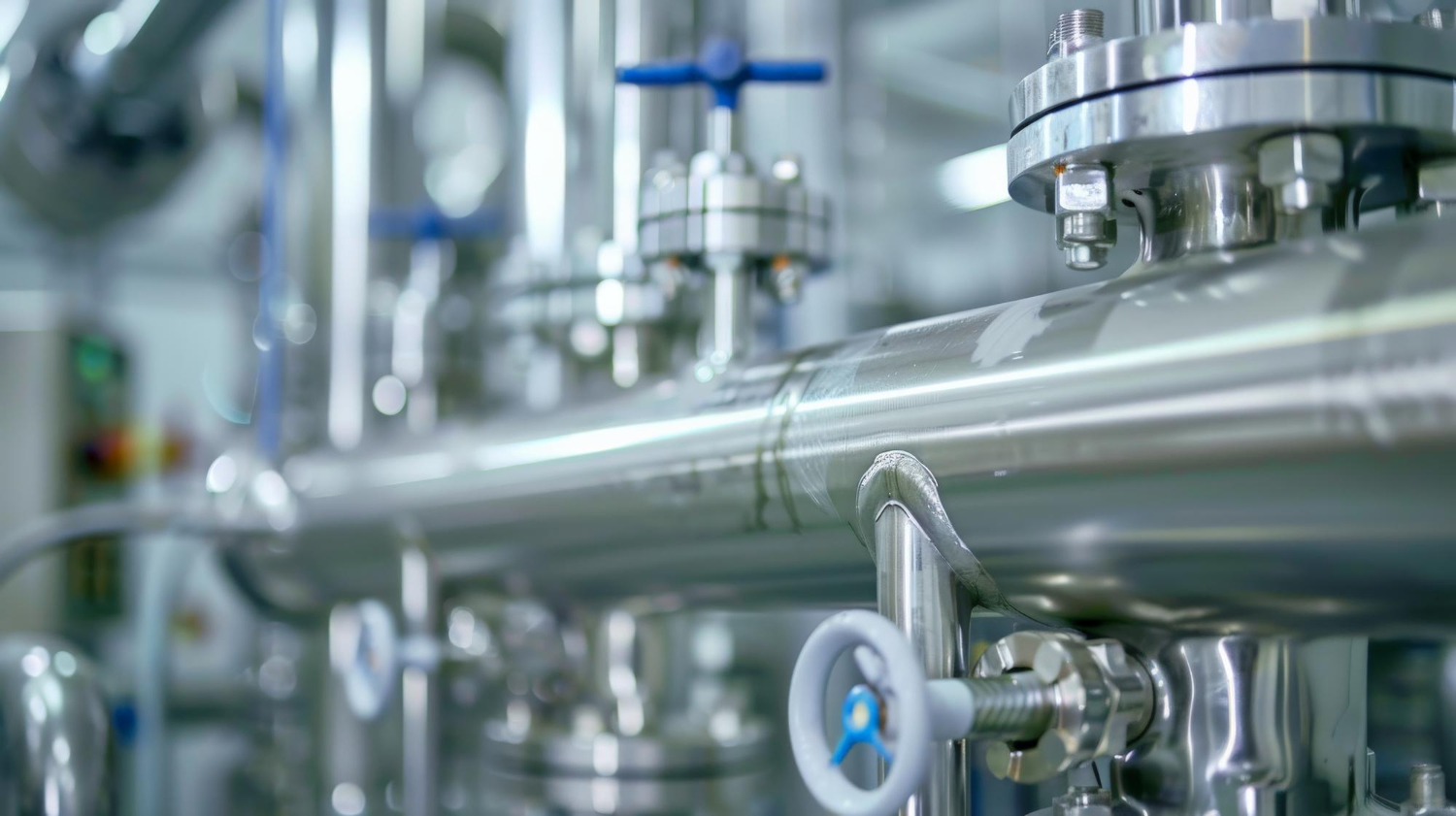
Stainless steel is widely used in chemical and petrochemical plants for piping, tanks, equipment and structures. It resists many chemicals far better than carbon steel and performs well at high temperatures. The right grade depends on the chemicals and conditions in each part of the plant.
Kentzu Steel has supplied stainless steel pipes, fittings, flanges, sheets, plates and bars to industrial customers in Malaysia and across the ASEAN region since 1983.
Why Chemical Plants Use Stainless Steel
- Corrosion resistance. It handles many acids, alkalis, solvents and process waters that would quickly corrode carbon steel.
- Cleaner product. With the right grade, it is far less likely than carbon steel to shed rust into the process.
- Wide temperature range. It keeps its strength at both low and high temperatures, and heat-resistant grades are made for very hot service.
- Easy to fabricate. It is straightforward to cut and weld, and needs less maintenance over the life of the plant.
In a typical plant, it is used for process and utility piping, storage tanks and vessels, reactors, cooling water systems, high-temperature parts and plant structures.
Matching Stainless Steel to the Chemical
Stainless steel is corrosion-resistant, not corrosion-proof. It performs well with many chemicals, but the wrong grade, salt or contamination can still cause rust and corrosion. Learn more in our guide, What Is Stainless Steel?
The guide below gives a general picture for common chemicals.
Standard grades work well
- Nitric acid
- Stainless steel performs well, and 304L is widely used.
- Acetic acid
- Good resistance. 316L is better for hotter service.
- Hydrocarbons and most solvents
- Low corrosion risk when free of water and salts.
- Steam and clean water
- Reliable for utility and cooling lines.
Grade and temperature matter
- Caustic soda
- Suitable at moderate temperatures. Hot, strong caustic can cause cracking.
- Sulfuric acid
- Suitable only when very weak or very strong.
- Phosphoric acid
- 316L is often used, but impurities can increase corrosion.
- Salty water
- 316L has limits. Duplex stainless steel performs better.
Outside standard grades
- Hydrochloric acid
- Corrodes standard stainless grades unless very dilute.
- Hydrofluoric acid
- Needs specialist materials.
- Hot, strong salt solutions
- High risk of corrosion and cracking.
This is general information only. Small changes in concentration, temperature or impurities can change how a material performs. The final material choice should always be made by your plant or design engineer.
Grades We Supply
The grades below cover most stainless steel needs in chemical and petrochemical plants. The last column shows the forms Kentzu Steel supplies in each grade.
| Grade | Key Feature | Common Uses | Available As |
|---|---|---|---|
| 304L | General-purpose grade. Low carbon makes it suitable for welding. | Utility lines, water lines, general process equipment | Pipes, fittings, flanges, sheets, plates, bars, structural sections |
| 316L | Contains molybdenum, for better resistance to salt and many acids | More corrosive process lines | Pipes, fittings, flanges, sheets, plates, bars, structural sections |
| Duplex (UNS S31803) | Stronger than 316L, with better resistance to salt and cracking | Salty or brackish water, tanks and vessels | Plates, on request |
| 253MA | Heat-resistant grade | Furnace parts and other very hot components | Sheets and plates |
For a simple comparison of the two most common grades, read our guide: Stainless Steel 304 vs 316: Differences, Uses & Which One Should You Choose?
Petrochemical Plants in Malaysia
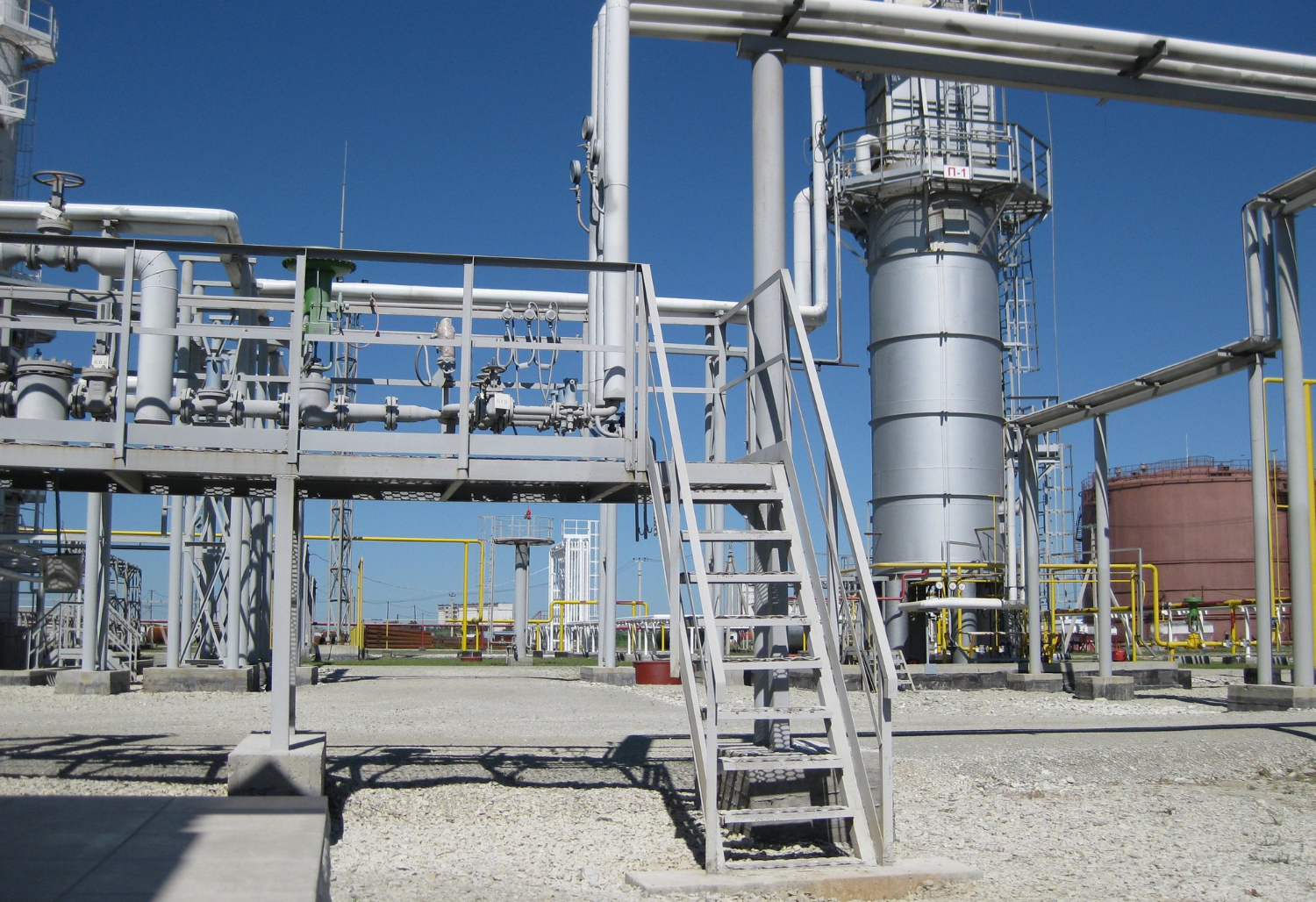
Malaysia's petrochemical industry is built on natural gas. According to MIDA, its main facilities are in Kertih in Terengganu, Gebeng in Pahang, the Pengerang Integrated Petroleum Complex in Johor and Bintulu in Sarawak.
All four are coastal locations. Salty sea air can corrode outdoor pipework and supports, and salt can also build up under the insulation on hot pipes. For exposed equipment at coastal plants, 316L or duplex stainless steel is often preferred, and keeping insulation dry helps prevent corrosion underneath.
Stainless Steel Products for Chemical & Petrochemical Plants
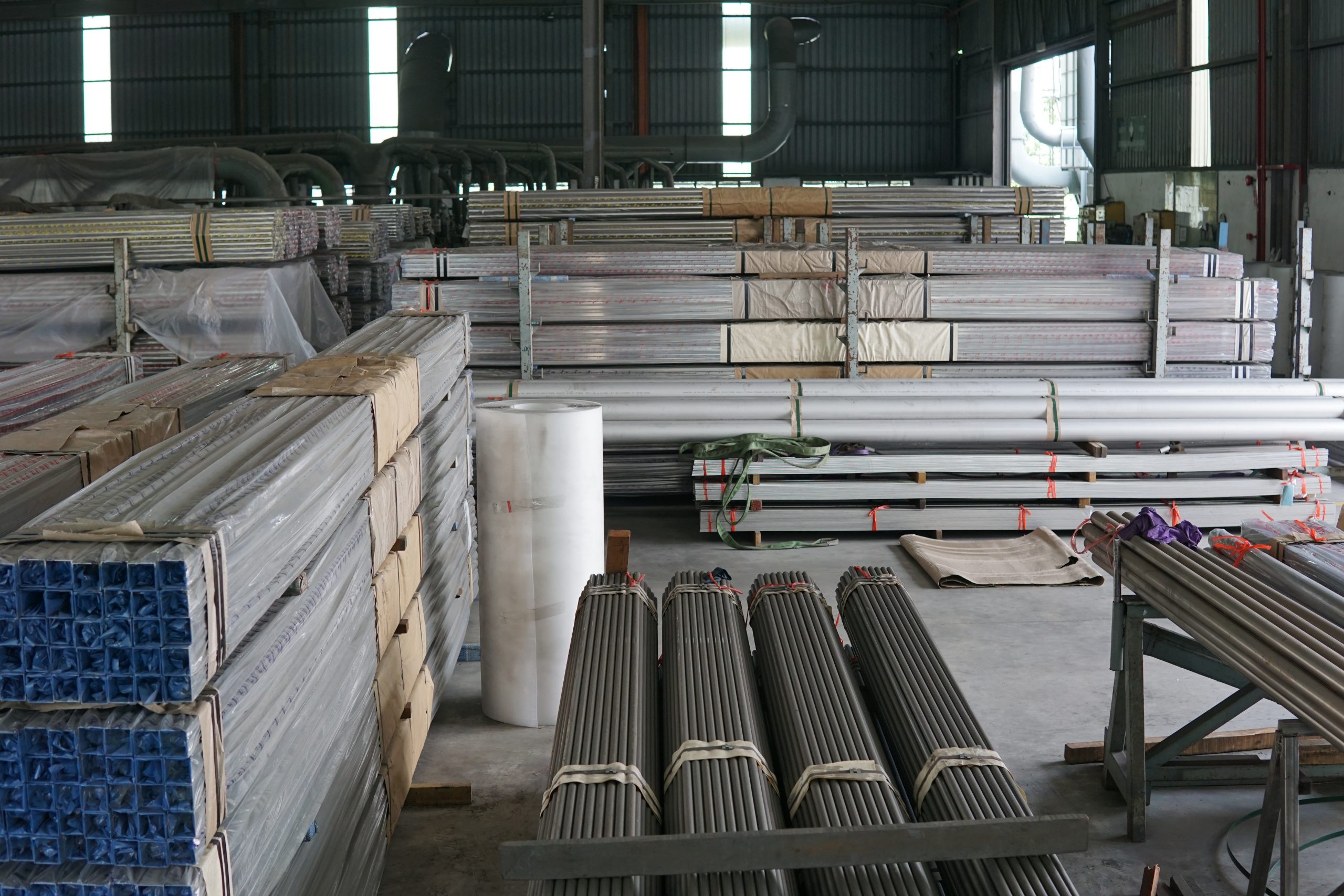
Kentzu Steel supplies the following stainless steel products for piping, equipment fabrication and plant structures.
| Product | Standard and Range | Typical Use in Chemical Plants |
|---|---|---|
| Welded & Seamless Pipes | ASTM A312; 304, 304L, 316, 316L; 1/2" to 16"; Sch 10S, 40S, 80S | Process lines, utility lines and cooling water |
| Butt Weld Fittings | ASTM A403; Sch 10S / 40S; elbows up to 12", tees up to 8" | Elbows, tees, reducers and stub ends |
| Forging Flanges | ASTM A182; 1/2" to 12"; Class 150 / 10K / PN16 | Connections at pumps, vessels and valves |
| Sheets & Plates | ASTM A240; grades include 304L, 316L and 253MA, with duplex on request; 0.4 to 50 mm | Tanks, vessels, ducting and high-temperature parts |
| Round Bars & Shafts | ASTM A276; 304, 304L, 316, 316L | Pump shafts, agitator parts and machined components |
| Chequered Plate | ASTM A240; 304, 304L, 316, 316L; 3 to 6 mm | Platforms, walkways and stair treads |
This range suits utility lines and lower-pressure process lines. If your project needs higher pressure ratings or larger sizes, please ask us before specifying.
For supports and frames, we also supply stainless steel angle bars, U channels, H beams and hollow sections.
Explore our stainless steel products
What to Include in Your Enquiry
A complete enquiry allows us to prepare an accurate quotation without repeated clarification. Please include:
State the product and grade exactly as specified by your engineer, for example 316L pipe to ASTM A312.
For pipe, give the size, schedule and length. For plate, give the thickness, width and length.
For flanges and fittings, state the required pressure class or schedule.
Briefly describe where the material will be used, such as a cooling water line or a storage tank.
List any certificates or test reports your project requires.
Share quantities, delivery schedule and site location, especially for shutdown work.
Why Choose Kentzu Steel for Chemical & Petrochemical Projects
Chemical and petrochemical projects need the right material in the right specification, delivered to schedule. This is how Kentzu Steel supports contractors, fabricators and plant maintenance teams.
Over four decades of stainless steel experience
Established in 1983, Kentzu Steel has more than 40 years of experience in stainless steel trading, sourcing and industrial supply, across a wide range of product forms, grades and specifications.
Pipes and fittings made within our group
Our subsidiary Kanzen Tetsu Sdn Bhd manufactures stainless steel welded pipes to standards including ASTM A312, and S.P. United Industry Sdn Bhd manufactures stainless steel fittings. Both are ISO certified.
One source for piping, plate and structural materials
A plant project often needs pipes, fittings, flanges, plates and structural sections at the same time. Sourcing them from one supplier simplifies coordination.
Support for customised requirements
Where standard products do not fully meet a project's needs, we support customised requirements based on the required sizes, specifications and intended application. Share your grade, dimensions, standards and drawings for assessment.
Experience across traditional and technology industries
We supply industries including oil and gas, petrochemical processing, water treatment, semiconductor manufacturing and data centre cooling systems. See the industries we serve.
Supply across Malaysia and ASEAN
Our products support industries across the Klang Valley, Johor, Penang, East Malaysia and the wider ASEAN region. Kentzu Steel is also registered with the Ministry of Finance Malaysia for government-related projects.
Frequently Asked Questions
Is stainless steel suitable for chemical plants?
Yes, for many applications. Stainless steel resists a wide range of chemicals far better than carbon steel. Some chemicals, such as hydrochloric acid, need other materials, so the grade must suit the specific conditions.
Can stainless steel rust in a chemical plant?
Yes. Stainless steel is corrosion-resistant, not corrosion-proof. The wrong grade, salt from sea air or contamination from carbon steel can still cause rust and corrosion.
Can Kentzu Steel recommend the right grade for my process?
Our team is happy to share information about our grades, sizes and product range to help you compare your options. As every process is different, we recommend that the final material choice is confirmed by your plant or design engineer, based on your actual operating conditions. Once you have their specification, simply send it to us and we will prepare a quotation to match.
What information should I provide for a quotation?
Provide the product, grade, sizes, pressure class, application, document requirements, quantity and delivery location.
Request a Quotation
Sourcing stainless steel for a chemical or petrochemical project? Send us your enquiry and our team will be glad to help. Even a rough list is a good place to start.