
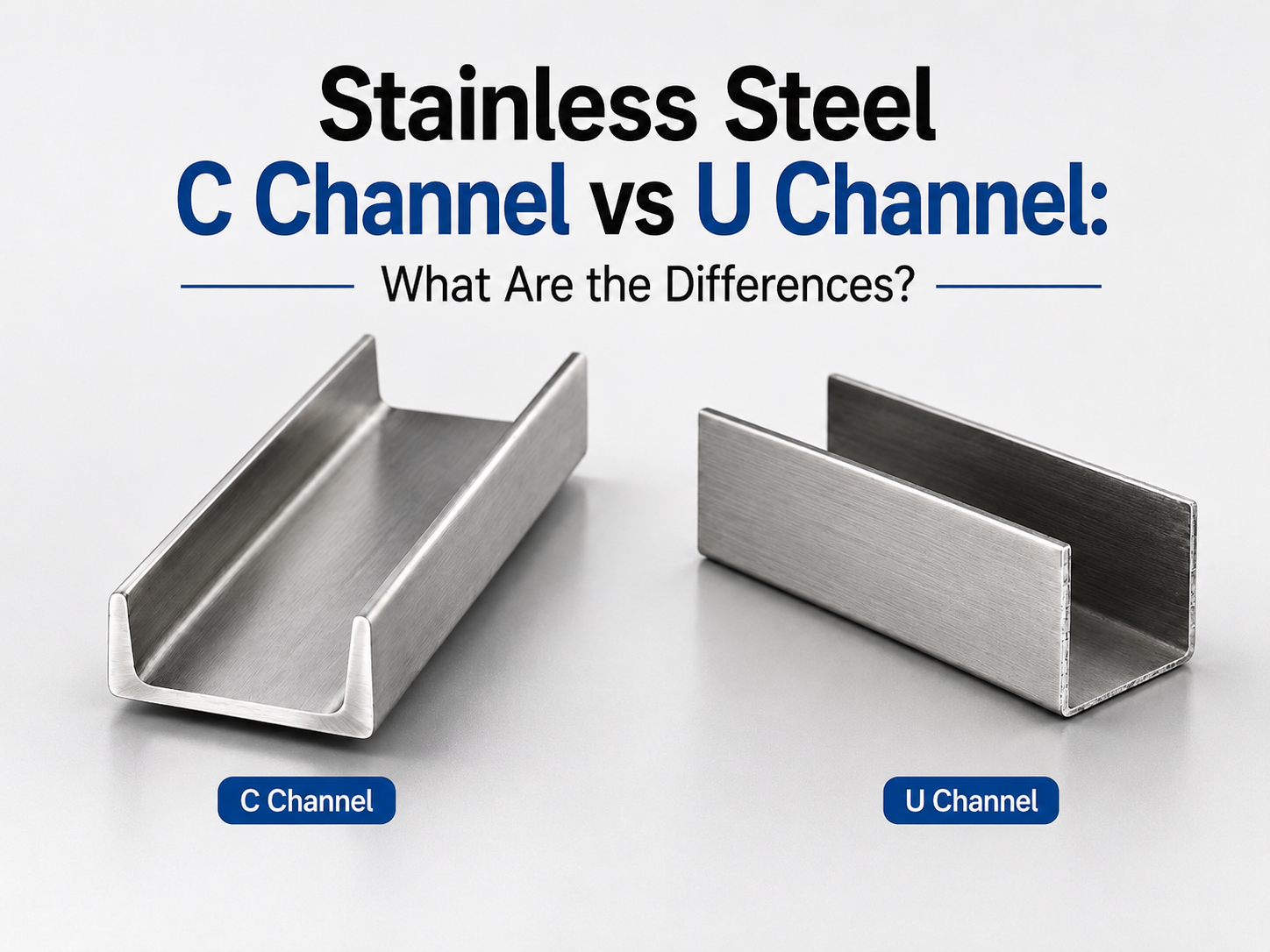
Stainless steel C channel and U channel can look similar, but manufacturers produce them through different processes and each profile suits different project requirements. For the profiles compared in this guide, stainless steel C channel is hot rolled, while stainless steel U channel is cold formed from stainless steel sheet or strip through bending or roll forming.
The manufacturing process affects the profile geometry, available dimensions, thickness options and typical applications. However, it is only one part of the decision. Stainless steel grade, dimensions, structural requirements, fabrication method and operating environment should also be considered when choosing between C channel and U channel.
If you are comparing stainless steel C channel vs U channel for an engineering, construction or fabrication project, the table below summarises the main differences.
Stainless Steel C Channel vs U Channel at a Glance
| Comparison | Stainless Steel C Channel | Stainless Steel U Channel |
| Manufacturing method | Hot rolled | Cold formed through bending or roll forming |
| Typical profile | Structural web with two flanges | Flat web with two parallel sides |
| Dimensions | Commonly follows established structural section sizes | Greater flexibility in width, side height and thickness |
| Material thickness | Commonly available as heavier structural sections | Based on stainless steel sheet or strip thickness |
| Structural use | Commonly used for structural frames and supports | Can be used structurally when correctly designed |
| Fabrication | Suits structural fabrication | Suits customised profiles and fabricated assemblies |
| Typical applications | Frames, platforms, equipment supports and machinery structures | Frames, guides, tracks, supports and machinery components |
| Best suited for | Projects requiring an established structural section | Projects requiring specific dimensions or parallel sides |
The manufacturing method provides the clearest distinction between the profiles discussed here. However, C channel and U channel terminology can vary between manufacturers, markets and technical standards, so it is still important to confirm the profile drawing, dimensions and manufacturing method before ordering.
What Is Stainless Steel C Channel?
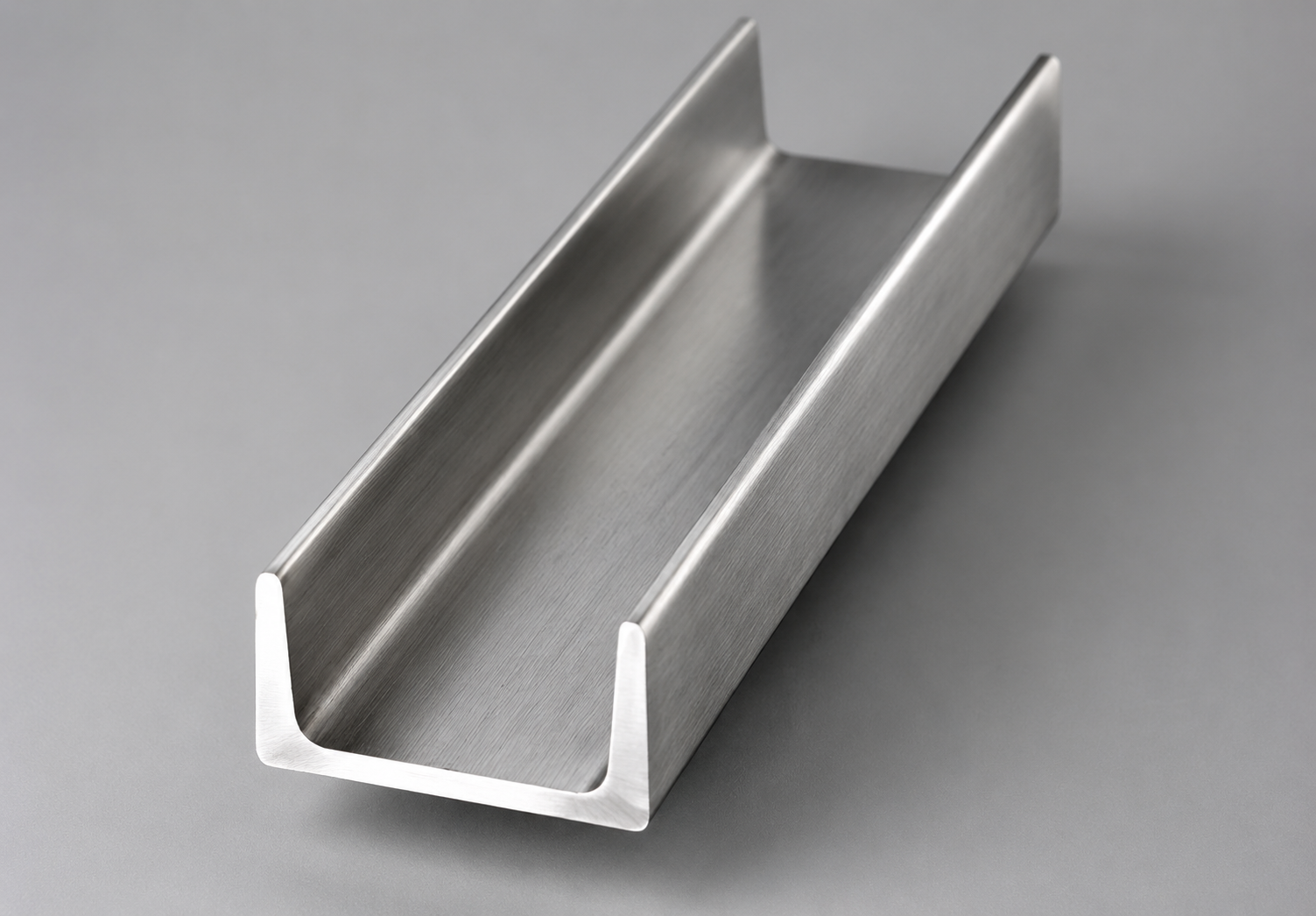
Stainless steel C channel is a structural profile with a central web and two flanges extending from the same side. Viewed from the end, its cross section resembles the letter C.
Manufacturers produce hot rolled stainless steel C channel by heating the material and passing it through a series of rollers until it reaches the required structural profile. This process allows manufacturers to produce substantial sections with defined dimensions and section properties.
Engineers can then use those section properties when assessing how the channel will perform under load.
What Does Stainless Steel C Channel Look Like?
A typical stainless steel C channel has one central web and two flanges. The hot rolling process can create internal radii and flange geometry that differ from the simpler bends found in many cold formed profiles.
The exact flange design depends on the relevant section specification. Some structural channels may use tapered internal flange surfaces, while others follow different dimensional profiles.
For this reason, it is better to identify the required stainless steel channel from its dimensions and technical drawing rather than from its C shaped appearance alone.
How Is Stainless Steel C Channel Made?
The process starts by heating stainless steel to the temperature required for hot rolling. Manufacturers then pass the material through several sets of rollers, with each stage gradually forming the web and flanges.
Throughout the process, manufacturers control dimensions such as channel depth, flange width and web thickness. After rolling, the channel cools before cutting and further processing.
Hot rolling works particularly well when a project requires a substantial structural section with defined dimensions and section properties.
What Is Stainless Steel C Channel Used For?
Engineers commonly specify stainless steel C channel when a project requires structural support together with the corrosion resistance of stainless steel. Typical applications include structural frames, industrial platforms, machinery frames, equipment supports, reinforcement members and supporting structures.
The correct channel size depends on the engineering requirements rather than the application name alone. Stainless steel grade, channel dimensions, section properties, load conditions, connection design and support conditions all affect the final selection.
What Is Stainless Steel U Channel?
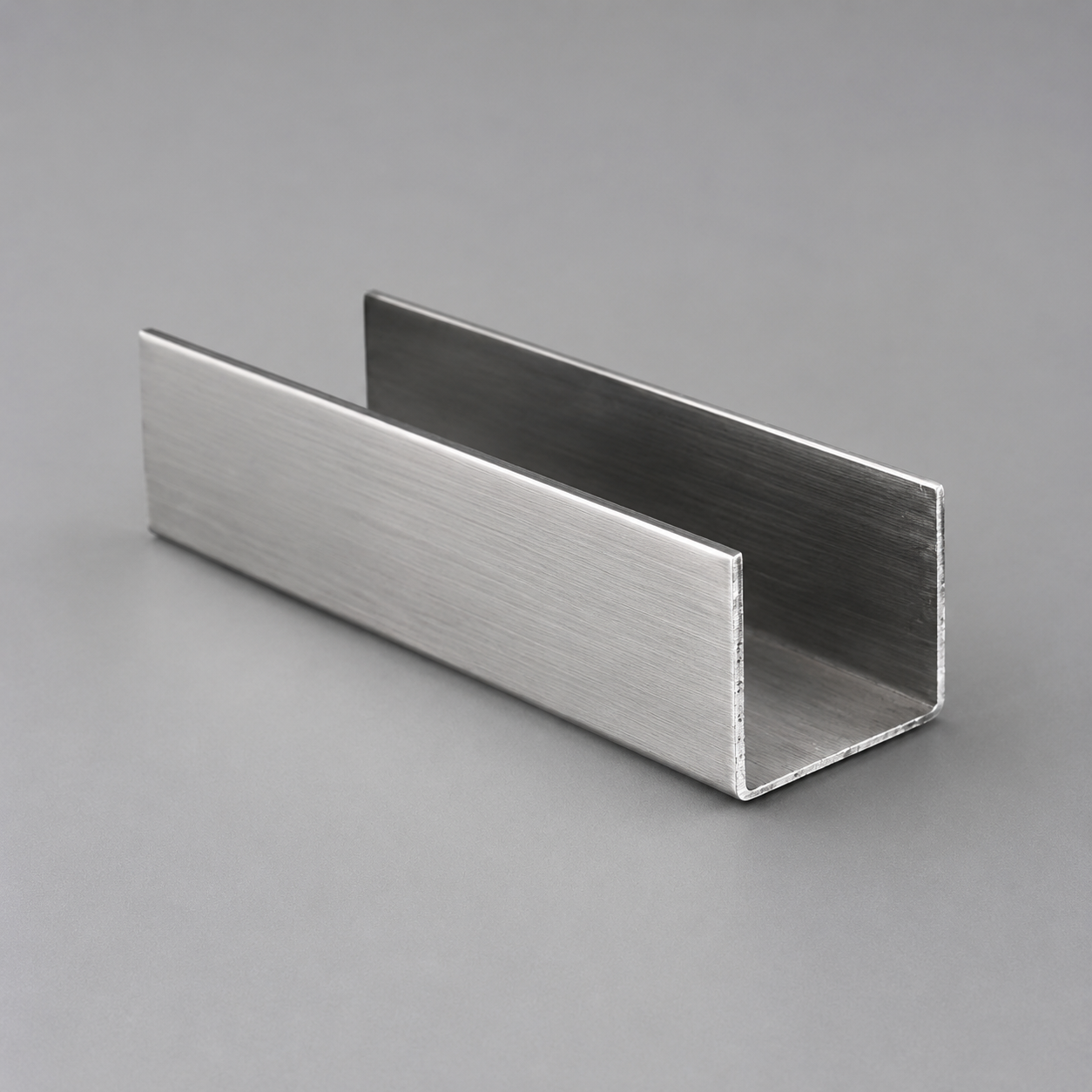
Stainless steel U channel is an open profile with a flat web and two sides extending in the same direction. Viewed from the end, its cross section resembles the letter U.
Manufacturers commonly produce stainless steel U channel through cold forming. They start with stainless steel sheet or strip and use bending or roll forming equipment to create the required profile.
Cold forming gives manufacturers greater control over width, side height and material thickness. This flexibility makes stainless steel U channel particularly useful when a project requires specific dimensions or when the channel forms part of a larger fabricated assembly.
How Is Stainless Steel U Channel Made?
Manufacturers commonly use press brake bending or roll forming to produce cold formed stainless steel U channel.
1. Press Brake Bending
Press brake bending starts with stainless steel sheet. A press brake creates two controlled bends that form the sides of the U channel.
The manufacturer can adjust the bend positions to achieve the required width and side height. This method works well when a project needs specific dimensions or smaller production quantities.
2. Roll Forming
Roll forming starts with stainless steel strip. The material passes through several sets of rollers, with each stage gradually forming the required U shaped profile.
This method suits longer production runs where consistent dimensions matter. Manufacturers can control the profile according to the required sheet thickness, width and side height.
Cold forming can also increase the strength of stainless steel locally through strain hardening. A cold formed U channel should therefore not be considered weak simply because manufacturers form it at room temperature.
What Is Stainless Steel U Channel Used For?
Stainless steel U channel serves a wide range of engineering, industrial, construction and fabrication applications. Common examples include support frames, machinery components, equipment frames, guides, tracks, edge sections, architectural components and fabricated assemblies.
Its parallel sides can provide a practical advantage when another flat component needs to sit against or inside the channel. This makes dimensional accuracy particularly important when specifying U channel.
4 Key Differences Between Stainless Steel C Channel and U Channel
-
Manufacturing Method
Manufacturing provides the main difference between the two profiles discussed in this guide. Manufacturers produce stainless steel C channel through hot rolling, while they produce stainless steel U channel through cold forming methods such as bending or roll forming.
The manufacturing method affects the finished profile, thickness options and dimensional flexibility. Hot rolling suits established structural sections, while cold forming provides greater flexibility when a project requires a particular profile.
-
Profile and Flange Geometry
Stainless steel C channel normally has a structural web and two flanges. The rolling process may create internal radii or flange geometry according to the relevant section specification.
Cold formed stainless steel U channel normally has a flat web and two parallel sides. Because the manufacturer starts with sheet or strip, the material thickness remains relatively consistent across most of the profile.
This difference becomes particularly important when the channel needs to fit or align with another fabricated component.
-
Dimensions and Thickness
Hot rolled stainless steel C channel commonly follows established structural section dimensions. Engineers can use the corresponding section properties when completing structural calculations.
Cold formed stainless steel U channel offers greater dimensional flexibility. Manufacturers can control the overall width, side height, material thickness and length according to the project requirements.
When specifying U channel dimensions, it is important to state whether the measurements refer to the inside or outside of the profile. Material thickness and bend radius reduce the internal opening, which can affect whether another component fits correctly.
-
Fabrication and Installation
Fabricators can cut, drill and weld both stainless steel C channel and U channel using procedures suitable for the selected stainless steel grade.
U channel can make alignment easier in some fabricated assemblies because of its parallel sides. Its dimensional flexibility can also help when the channel needs to match a specific component, machine or fabricated structure.
C channel may require more attention to flange geometry when the design requires a flat or flush connection. The project drawing and connection details should guide the fabrication method.
Which Is Stronger, Stainless Steel C Channel or U Channel?
Neither profile is automatically stronger than the other. Hot rolled stainless steel C channel commonly comes in heavier structural sizes, but the C or U shape alone does not determine load capacity.
Structural performance depends on several factors, including stainless steel grade, yield strength, material thickness, channel depth, flange or side width, cross sectional area, moment of inertia, section modulus, unsupported length, support conditions, connections and load direction.
A larger or thicker U channel can therefore outperform a smaller C channel under certain loading conditions. For structural applications, the correct approach is to compare the actual section properties and engineering requirements rather than assume that C channel is always stronger.
Does the Size of Stainless Steel C Channel and U Channel Matter?

Yes. Channel dimensions directly affect structural performance, weight and dimensional fit.
For structural calculations, engineers may consider channel depth, flange or side width, web thickness, section area, section modulus and moment of inertia. The required values depend on how the channel carries and transfers loads.
For stainless steel U channel used in fabricated assemblies, internal dimensions can be just as important. If another part needs to sit inside the channel, the inside width, side height, material thickness and bend radius should be clearly stated.
A technical drawing is often the clearest way to communicate these requirements.
Does Stainless Steel Grade Matter?
Yes. C channel and U channel describe the profile, while the stainless steel grade affects corrosion resistance and mechanical performance.
Stainless Steel 304
Grade 304 suits many general engineering, industrial, commercial and fabrication applications. It provides good corrosion resistance across many common service environments.
Stainless Steel 316
Grade 316 contains molybdenum, which improves resistance to pitting and crevice corrosion in chloride environments. This makes it suitable for many coastal, marine and certain chemical applications.
For projects in Malaysia and other coastal markets, it is useful to consider the actual exposure conditions. High humidity alone does not automatically require Grade 316, but seawater, salt spray and other chloride exposure can affect grade selection.
If you are deciding between these two common grades, read our guide to stainless steel 304 vs 316 for a clearer comparison of their differences, properties and applications.
Choosing between C channel and U channel does not replace the need to select the correct stainless steel grade.
Stainless Steel C Channel or U Channel: Which Should You Choose?
The right choice depends on the engineering and fabrication requirements rather than which channel is generally considered better.
Consider Stainless Steel C Channel When You Need
- A hot rolled structural section
- Established structural dimensions
- Defined section properties for engineering calculations
- Structural frames or supporting members
- A channel already specified in the project design
Consider Stainless Steel U Channel When You Need
- A cold formed stainless steel profile
- Parallel sides
- Specific width or side height dimensions
- A particular material thickness
- Greater dimensional flexibility
- A channel that forms part of a fabricated assembly
- Frames, guides, tracks or machinery components
If an engineer or technical drawing already specifies a particular section, it is important to follow that requirement. Changing from one channel profile to another without reviewing the dimensions and structural properties can affect the completed design.
What Should You Specify When Buying Stainless Steel U Channel?
A clear specification helps ensure that the supplied U channel matches your project requirements. When requesting stainless steel U channel, please provide as much of the following information as possible:
- Stainless steel grade
- Overall width
- Side height
- Material thickness
- Required length
- Quantity
- Surface finish, when required
- Dimensional tolerance, when required
- Bend radius, when critical
- Applicable ASTM, EN, JIS or other project standard
- Material certification requirements, when applicable
- Delivery destination
- Technical drawing for customised dimensions
Please also state whether the dimensions refer to the inside or outside of the U channel. This detail becomes particularly important when another component needs to fit inside the profile.
If your project follows a particular specification or requires supporting documentation, including these requirements at the enquiry stage helps ensure that the product can be reviewed correctly before ordering.
For broader purchasing considerations, you can also read our guide to choosing a stainless steel supplier and manufacturer in Malaysia.
Conclusion
The main difference between stainless steel C channel and U channel lies in how each profile is made. C channel is hot rolled as a structural section, while U channel is cold formed from stainless steel sheet or strip through bending or roll forming.
That manufacturing difference carries through to everything else: profile geometry, available dimensions, thickness options and typical applications. Hot rolled C channel suits structural designs built around established sections, while cold formed U channel offers the dimensional flexibility that fabricated assemblies and customised profiles require.
Neither profile is stronger simply because of its shape. Stainless steel grade, dimensions, thickness, section properties, load conditions and connection design determine actual structural performance, so the engineering data should always guide the selection.
Before ordering, review the technical drawing, material grade, dimensions, fabrication requirements and operating environment. If your project calls for stainless steel U channel, Kentzu Steel can review your specifications and assist with your enquiry.
Looking for Stainless Steel U Channel?

Kentzu Steel supplies stainless steel U channel to customers across Malaysia, East Malaysia, ASEAN and international markets.
Established in 1983, Kentzu Steel brings more than four decades of experience as a stainless steel supplier and stockist in Malaysia, and is registered with the Ministry of Finance Malaysia for government related projects. Learn more about what makes Kentzu Steel one of the top stainless steel companies in Malaysia.
If you are looking to purchase stainless steel U channel, please send us your required stainless steel grade, width, side height, thickness, length, quantity and delivery destination. A technical drawing is also helpful when your project requires specific dimensions or tolerances.
Contact Kentzu Steel to discuss your stainless steel U channel requirements and current availability.
Frequently Asked Questions
1. What Is the Difference Between Stainless Steel C Channel and U Channel?
The main difference comes from the manufacturing process. Stainless steel C channel is hot rolled, while stainless steel U channel is cold formed from stainless steel sheet or strip through bending or roll forming.
The manufacturing process also affects the profile geometry, available dimensions and typical applications.
2. What Is Stainless Steel C Channel?
Stainless steel C channel is a structural profile with a central web and two flanges that form a C shaped cross section. Manufacturers produce hot rolled C channel for structural applications such as frames, equipment supports and machinery structures.
3. What Is Stainless Steel U Channel?
Stainless steel U channel has a flat web and two sides that form a U shaped cross section. Manufacturers commonly make it by cold forming stainless steel sheet or strip through bending or roll forming.
Cold forming provides greater flexibility in width, side height and material thickness.
4. Is Stainless Steel C Channel Stronger Than U Channel?
Not always. Actual strength depends on the stainless steel grade, dimensions, thickness, section properties, load conditions and support arrangement rather than the C or U name alone.
A larger or thicker U channel can perform better than a smaller C channel under certain loading conditions.
5. Can Stainless Steel U Channel Be Used for Structural Applications?
Yes, when an engineer designs the section for the required structural loads and conditions. The correct grade, thickness, dimensions, connections and support arrangement depend on the application.
A structural engineer should verify the section when the U channel forms part of a load carrying structure.
6. What Dimensions Should I Provide When Ordering Stainless Steel U Channel?
Please provide the overall width, side height, material thickness, length and quantity. It is also helpful to state whether the dimensions refer to the internal or external profile.
For customised requirements, a technical drawing can clarify the bend radius, dimensional tolerances and fit requirements.
7. Where Can I Buy Stainless Steel U Channel in Malaysia?
Kentzu Steel supplies stainless steel U channel to customers in Malaysia and international markets. Please send us your required stainless steel grade, dimensions, thickness, length, quantity and delivery destination so we can review your enquiry.
