
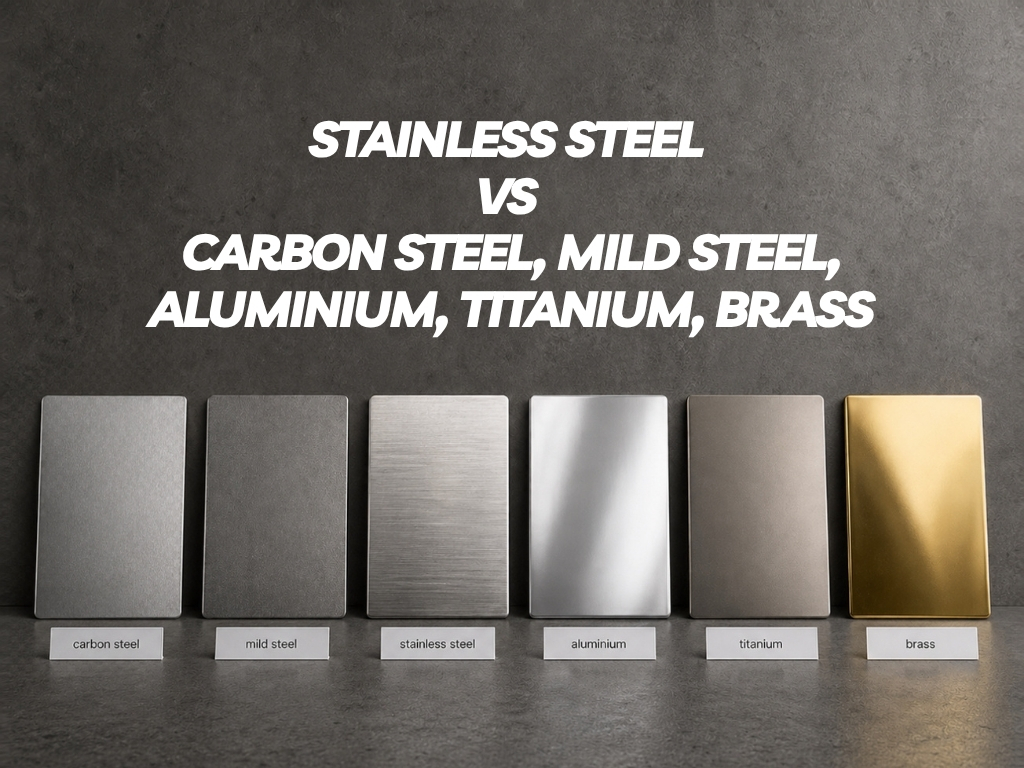
For most industrial fabrication, stainless steel is the right answer. It offers strong corrosion resistance, handles heat well, performs in food and medical applications, and lasts for decades with minimal maintenance. But buyers often want to confirm this by comparing stainless steel against the alternatives: carbon steel, mild steel, aluminium, titanium, and brass.
This guide walks through each comparison, so you can see exactly where stainless steel performs, where the alternatives have a narrow niche, and why stainless steel is the preferred choice for the demanding environments most industrial buyers face.
Quick Comparison: Stainless Steel vs 5 Common Metals
|
Metal |
Corrosion Resistance | Strength | Maintenance |
Best Use |
| Stainless Steel (304/316) | Excellent | High | Minimal | Food, marine, chemical, structural, hygienic equipment |
| Carbon Steel | Poor (rusts) | Very high | High (paint, galvanising) | Coated structural, machinery |
| Mild Steel | Poor (rusts) | Moderate | High (paint, oiling) | Painted frames, general fabrication |
| Aluminium | Good | Low to moderate | Low | Weight-critical transport and aerospace |
| Titanium | Outstanding | Very high (alloys) | Minimal | Aerospace, medical implants |
| Brass | Good | Low to moderate | Low | Plumbing fittings, electrical connectors |
What Makes Stainless Steel Different
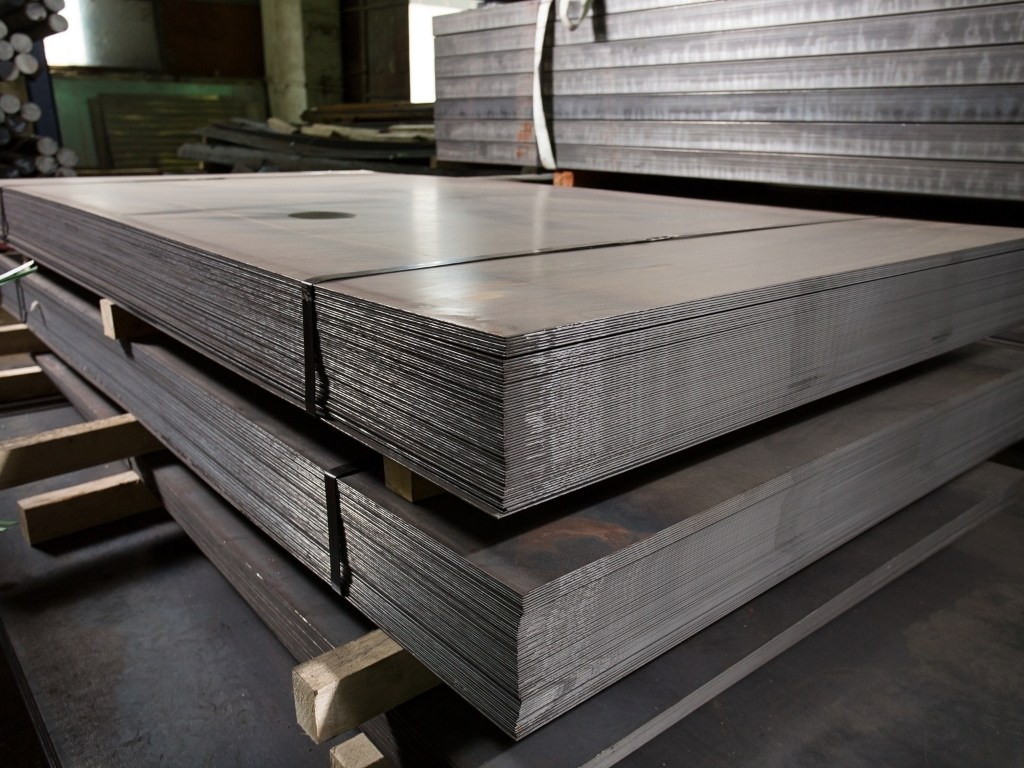
Stainless steel is iron alloyed with at least 10.5% chromium. The chromium forms a thin, self-repairing passive layer on the surface that significantly slows corrosion under most conditions. Higher grades like 316 add 2 to 3% molybdenum for stronger resistance to chlorides and acids.
The key advantage is that corrosion resistance is built into the alloy itself, not added through coatings that can chip, scratch, or wear away. That said, stainless steel is not immune to corrosion in every condition. The right grade has to match the environment: 304 performs well in most general industrial conditions, while 316 is needed for chloride-rich, marine, and aggressive chemical environments. Surface contamination, mechanical damage, or the wrong grade choice can still allow staining or pitting. This is why grade selection and supplier guidance matter from the start. For a deeper look at the most common family of stainless steel, see our guide to austenitic stainless steel.
Carbon Steel vs Stainless Steel
Carbon steel offers higher tensile strength in some grades and a lower upfront price, but it rusts when exposed to moisture and requires ongoing maintenance such as painting, galvanising, and inspection. Stainless steel costs more upfront but offers strong corrosion resistance without coatings, requires minimal maintenance, and lasts far longer in humid, chemical, or food environments.
Carbon steel contains more carbon than mild steel (typically 0.3% to 1.0% in engineering grades) and very little chromium. The higher carbon content gives medium-carbon grades good strength, but the lack of chromium means corrosion protection has to be added externally. Once that coating fails, the steel beneath rusts quickly.
| Property | Carbon Steel | Stainless Steel |
| Corrosion resistance | Poor (requires coatings) | Excellent |
| Yield strength (typical) | 310 to 700+ MPa (depends on grade and treatment) | 205 MPa annealed (much higher after forming) |
| Maintenance | Painting, galvanising, regular inspection | Minimal |
| Lifecycle cost | Higher (recoating, replacement) | Lower (long service life) |
Carbon steel is preferred for structural and machinery applications where coatings, galvanising, or ongoing maintenance form part of the design. For any application involving direct exposure to moisture, chemicals, food contact, or long service life with minimal maintenance, stainless steel is the better investment.
Mild Steel vs Stainless Steel
Mild steel is the cheapest fabrication metal and the easiest to cut, drill, and weld. However, it offers no inherent corrosion protection and rusts within days of exposure to humidity. Stainless steel requires more careful fabrication but performs well in moisture, chemicals, washdown environments, and food contact without coatings.
Mild steel is a low-carbon steel (typically 0.05% to 0.25% carbon) such as AISI 1018 or A36 plate. It is the default in most fabrication shops because of its cost and workability. The trade-off becomes clear in any environment where the steel will face moisture, chemicals, or hygiene requirements.
| Property | Mild Steel | Stainless Steel |
| Corrosion resistance | Poor (rusts quickly) | Excellent |
| Yield strength (typical) | ~250 MPa (A36) | 205 MPa annealed (much higher after forming) |
| Workability | Very easy | More demanding |
| Lifecycle cost | Higher (frequent maintenance, replacement) | Lower (decades of service) |
Mild steel is preferred for general fabrication where coatings handle rust protection, such as painted structural frames and indoor brackets. For outdoor uncoated use, washdown environments, food processing, or marine applications, stainless steel is the correct specification.
Aluminium vs Stainless Steel
Aluminium is roughly one-third the weight of stainless steel, which makes it useful in transport, aerospace, and weight-critical applications. However, aluminium loses significant strength at moderate temperatures, is softer and less wear-resistant than stainless steel, and weakens at welded joints. Stainless steel is heavier but harder, more wear-resistant, tolerates much higher temperatures, and performs across a broader range of industrial environments.
Aluminium has a density of around 2.7 g/cm³ compared to stainless steel at roughly 8.0 g/cm³. Common structural aluminium alloys like 6061-T6 begin to lose significant strength above 175°C, while stainless steel resists oxidation up to around 870°C and retains usable strength at temperatures far higher than aluminium can tolerate. For high-heat applications, washdown environments, and hygiene-critical industrial use, aluminium is not a practical alternative.
| Property | Aluminium | Stainless Steel |
| Density | ~2.7 g/cm³ | ~8.0 g/cm³ |
| Corrosion resistance | Good (oxide layer) | Excellent |
| Heat tolerance | Loses strength above ~175°C | Oxidation resistance to ~870°C |
| Hardness and wear resistance | Lower, softer surface | Higher, more wear-resistant |
Aluminium is preferred when weight reduction is the primary requirement, such as in aerospace components, transport applications, marine vessel construction, and electrical enclosures. For food processing equipment, palm oil and chemical processing, structural fabrication under sustained load, high-heat applications, and washdown environments, stainless steel is the right choice for both performance and lifecycle cost.
Titanium vs Stainless Steel
Titanium offers excellent corrosion resistance and a high strength-to-weight ratio, but it costs 5 to 10 times more than stainless steel and requires specialised fabrication techniques. For the vast majority of industrial applications, stainless steel delivers comparable or sufficient performance at a fraction of the cost. Titanium is reserved for specialised applications such as aerospace, medical implants, and certain extreme corrosion environments.
Titanium has a density of about 4.5 g/cm³, roughly 44% lighter than stainless steel. Yield strength varies by grade: commercially pure titanium (Grade 2) sits around 275 MPa, similar to mild steel, while titanium alloys like Ti-6Al-4V reach 880 to 1100 MPa. The fabrication challenge is significant: titanium requires welding under shielding gas, slow machining, and specialised tooling, which pushes total project cost well above the metal price alone.
| Property | Titanium | Stainless Steel |
| Cost per kg | 5 to 10 times higher | Baseline |
| Fabrication | Specialised, slow, expensive | Standard processes |
| Corrosion resistance | Outstanding (specific environments) | Excellent (most environments) |
| Practical industrial use | Narrow (aerospace, medical, extreme corrosion) | Broad (food, chemical, marine, structural) |
Titanium is preferred for aerospace components, medical implants, and a few highly specialised marine or chemical processing applications where stainless steel cannot perform. For practically every other industrial use, including food processing, chemical handling, marine fabrication, and structural work, stainless steel is the correct and far more cost-effective choice.
Brass vs Stainless Steel
Brass is a copper-zinc alloy with good electrical conductivity and machinability, which makes it the standard for plumbing fittings, valves, and electrical connectors. However, brass is softer, weaker under structural load, prone to losing zinc in seawater (a process called dezincification that weakens the metal), and often costs more per kg than stainless steel. For structural fabrication, food contact, and washdown environments, stainless steel is the stronger and more reliable choice.
Brass conducts heat and electricity far better than stainless steel and machines easily, which explains its dominance in plumbing and electrical hardware. Copper alloys with high copper content also have natural antimicrobial properties. However, these advantages do not extend to structural or industrial use, where brass deforms under heavy load and corrodes in saltwater unless dezincification-resistant (DZR) grades are specified.
| Property | Brass | Stainless Steel |
| Strength under load | Lower, deforms under heavy load | Higher, holds structural integrity |
| Corrosion in seawater | Susceptible to dezincification | Excellent (especially 316) |
| Structural suitability | Poor | Excellent |
| Cost per kg | Often higher than 304 SS | Baseline |
Brass is preferred for plumbing fittings, valves, electrical contacts, and decorative hardware where conductivity or appearance is the priority. For structural fabrication, food processing, washdown environments, and marine applications, stainless steel is the correct material.
How to Choose the Right Metal for Your Project
The choice of metal depends on the conditions the part will face. Use these questions to confirm the right material:
- What is the operating environment? Humid, coastal, chemical, washdown, or food contact environments demand stainless steel.
- What is the lifecycle expectation? A 10 to 25-year service life almost always favours stainless steel once total cost of ownership is calculated.
- What is the maintenance budget? Coated carbon and mild steel require ongoing inspection, repainting, and eventual replacement. Stainless steel does not.
- Is hygiene a factor? Food processing, pharmaceutical, medical, and beverage applications require stainless steel.
- Are you operating in tropical conditions? Malaysian humidity, monsoon exposure, coastal salt air, and palm oil chemistry all accelerate corrosion in carbon steel and mild steel. Stainless steel is the practical default, with grade selection (304 vs 316) matched to the specific environment.
For industrial fabrication in Malaysia and across the ASEAN region, stainless steel delivers the lowest total cost of ownership in the vast majority of applications. Cheaper alternatives often look attractive on the initial quote but cost more over the equipment’s lifespan once maintenance, downtime, and replacement are factored in.
Final Thoughts
Each of these metals has its place. Aluminium has its niche in weight-critical transport. Titanium serves aerospace and medical implants. Brass is the standard for plumbing and electrical fittings. Carbon steel and mild steel work for coated structural use where maintenance is planned for.
For everything else, especially industrial fabrication in tropical climates, food and beverage processing, marine and coastal exposure, chemical handling, semiconductor manufacturing, and data center infrastructure, stainless steel is always the right material. With the correct grade selected for the environment, it performs across the widest range of conditions, requires the least ongoing care, and delivers the longest service life of any metal in this comparison.
Need Help Choosing the Right Stainless Steel for Your Project?

If you are unsure which grade or product form of stainless steel is right for your application, Kentzu Steel is here to help.
As a trusted stainless steel supplier, we offer pipes, coils, sheets, plates, bars, hollow sections, channels, H-beams, chequered plates and more with customised options to match your project specifications.
Our stainless steel solutions support industries across Malaysia, East Malaysia, ASEAN, and global markets, including engineering, oil and gas, palm oil, electrical and energy, construction, semiconductor manufacturing, and data center infrastructure.
Contact Kentzu Steel today to discuss your requirements or request technical support for your next project.
FAQ
- Is stainless steel always better than carbon steel?
Stainless steel is the better choice in any environment involving moisture, chemicals, food contact, or long service life. Carbon steel only outperforms stainless when corrosion exposure is fully controlled and ongoing maintenance is planned for. For most industrial applications, stainless steel delivers lower total cost of ownership.
- Why should I choose stainless steel over mild steel for fabrication?
Mild steel is cheaper and easier to weld, but it rusts within days of humidity exposure and requires constant maintenance. Stainless steel costs more upfront but offers strong corrosion resistance without coatings, lasts decades, and is the only practical choice for outdoor uncoated use, washdown, food, or marine fabrication.
- Canaluminiumreplace stainless steel in industrial use?
Only for weight-critical applications such as aerospace and transport. Aluminium loses significant strength above 175°C, is softer and less wear-resistant than stainless steel, and weakens at welded joints. Stainless steel handles heat, sustained loads, and washdown chemistry that aluminium cannot.
- Is titanium worth the costoverstainless steel?
Rarely. Titanium costs 5 to 10 times more per kg and requires specialised fabrication. It is justified only in aerospace components, medical implants, and a few extreme corrosion environments. For practically all industrial applications, stainless steel delivers the performance needed at a fraction of the cost.
- When should I use brass instead of stainless steel?
Brass is the right choice for plumbing fittings, valves, and electrical connectors where conductivity and machinability matter. For structural fabrication, food processing, washdown environments, and marine applications, stainless steel is stronger, more durable, and more cost-effective.
